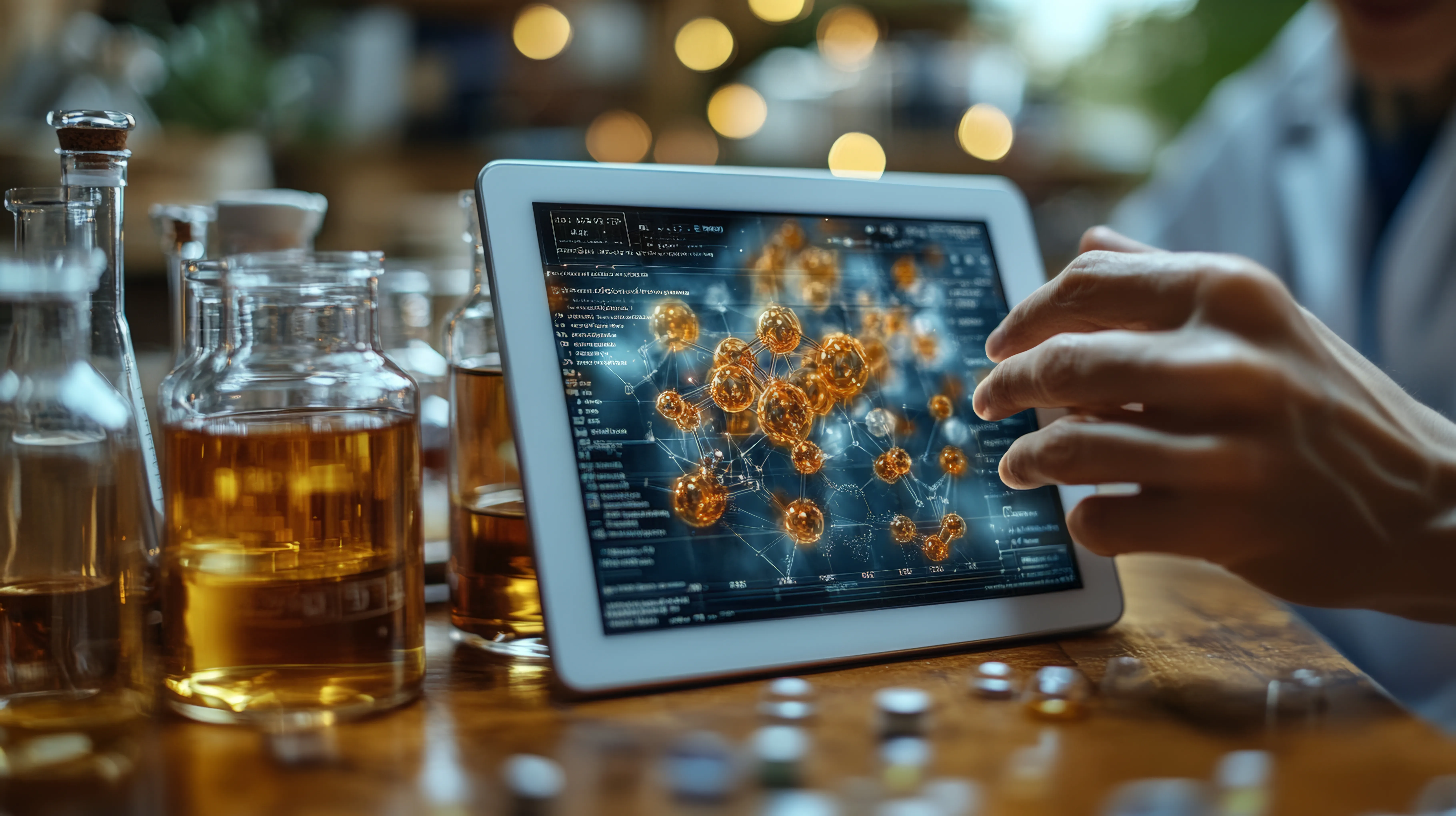
Artificial intelligence is significantly boosting early-stage research in the fast expanding field of drug discovery. AI virtual screening drug discovery is revolutionizing the process of finding promising drug candidates in 2027 by making it quicker, more intelligent, and more economical.
Conventional hit discovery techniques are frequently costly and time-consuming. Before identifying promising possibilities, researchers may test chemicals in labs for months. Before starting research, scientists may now computationally assess millions or even billions of molecules thanks to AI-powered virtual screening. World BI is again organizing a conference on Drug Discovery Innovation Programme next year in Europe.
This development is enabling pharmaceutical companies to bring novel treatments closer to patients and accelerating in silico hit discovery by up to ten times.
What is AI Powered Virtual Screening?
A computational method for determining which compounds are most likely to interact with a biological target is called virtual screening. Researchers can forecast which compounds have the best chance of success by fusing AI and machine learning.
Virtual screening driven by AI benefits scientists:
- Quickly screen massive compound libraries.
- Make more precise predictions about molecular interactions.
- Cut down on false positives.
- Give promising medication candidates top priority.
- Conserve important resources and time.
AI continuously improves screening performance by learning from chemical and biological samples instead of depending just on conventional computational models.
Why in Silico Hit Discovery Matters
Because it enables researchers to find possible candidates before proceeding with expensive laboratory testing, in silico hit discovery has become crucial for contemporary drug discovery.
Among its main advantages are:
- Quicker identification of hits.
- Lower expenses for research and development
- Better decision-making in the beginning.
- A more effective use of lab resources.
- More chances to investigate new compounds.
Computational methods are assisting researchers in overcoming conventional constraints and expediting the discovery process as drug targets grow more complicated.
Ligand Based Virtual Screening AI
In order to screen large compound libraries and find possible drug candidate ligand based virtual screening (LBVS) first analyzes the structure and biological activity of known drug molecules to determine the chemical and physical properties responsible for effective target binding.
AI and deep learning have greatly improved this process by predicting drug-target interactions (DTI) and drug-target affinity (DTA). These models represent drugs and proteins as vectors or graphs, extract key features, and estimate how strongly they are likely to bind.
Virtual screening saves time and money by enabling researchers to computationally assess millions of chemicals prior to laboratory testing. DTI prediction is a crucial part of the larger virtual screening process since it focuses on determining whether a drug can interact with a biological target.
Contemporary deep learning techniques make use of:
- Classification models to forecast the presence of a drug-target interaction.
- Regression models to predict binding affinity values such as Kd, Ki, and IC50.
AI-powered ligand-based virtual screening is speeding up in silico hit identification and enhancing early-stage drug development by precisely forecasting binding strength and interactions.
Structure Based Virtual Screening AI
One of the most important developments influencing drug discovery in 2027 is structure-based virtual screening AI.
Current AI models are able to:
- Examine protein structures more accurately.
- Estimate binding affinities.
- Boost the precision of molecular docking.
- Make recommendations for ideal chemical changes.
- Encourage therapeutic areas that are challenging to address.
To increase screening accuracy, researchers are increasingly combining molecular simulations and machine learning models with protein structure prediction techniques.
In the early phases of medication research, this combination helps scientists make better selections.
Ultra Large Library Screening
With billions of virtual substances, chemical libraries are bigger than they have ever been. Without AI, screening such massive datasets would be very difficult.
Researchers can use ultra-large library screening to:
- Investigate large chemical spaces.
- Find new molecular scaffolds.
- Boost the quality of hits.
- Lower the cost of computation.
- Increase the speed of screening processes.
The time needed to find possible medication candidates is greatly decreased by using AI models to rank compounds before computational docking. Because of this, computerized hit finding in the biotechnology and pharmaceutical sectors is getting quicker and more scalable in 2027.
Machine Learning and Computational Hit Finding
A key component of computational hit finding tactics in 2027 is machine learning.
AI models are capable of:
- Forecast interactions between drugs and targets.
- Sort molecules according to how likely they are to succeed.
- Gain knowledge from prior screening data.
- Enhance scoring and docking techniques.
- Increase the overall effectiveness of screening.
Researchers are increasing the speed and precision of hit discovery efforts by integrating virtual screening technologies with machine learning.
Conclusion
AI is changing the way scientists look for new drugs. The industry is shifting toward quicker and more effective research procedures, from AI virtual screening drug discovery and structure-based virtual screening AI to ultra-large library screening and machine learning-driven computational hit finding.
Pharmaceutical businesses may now analyze larger chemical libraries, shorten development times, and make more informed scientific judgments thanks to in silico hit discovery in 2027. AI is becoming a vital tool that enables researchers to find better drug candidates in much less time, even though it is not replacing them.
Virtual screening is spearheading the shift in drug discovery toward a more digital, data-driven, and AI-powered future.
World BI Drug Discovery Innovation Programme
The Drug Discovery Innovation Programme organized by World BI is a leading global event that brings together pharmaceutical executives, researchers, biotech innovators, and technology experts to explore the latest advancements in drug discovery and early development.
Organized by World BI, the conference focuses on key topics such as AI-driven drug discovery, target identification, precision medicine, biomarker development, computational drug design, and emerging therapeutic modalities. The programme provides a collaborative platform for industry leaders to share insights, address challenges, and accelerate the development of innovative therapies that improve patient outcomes worldwide