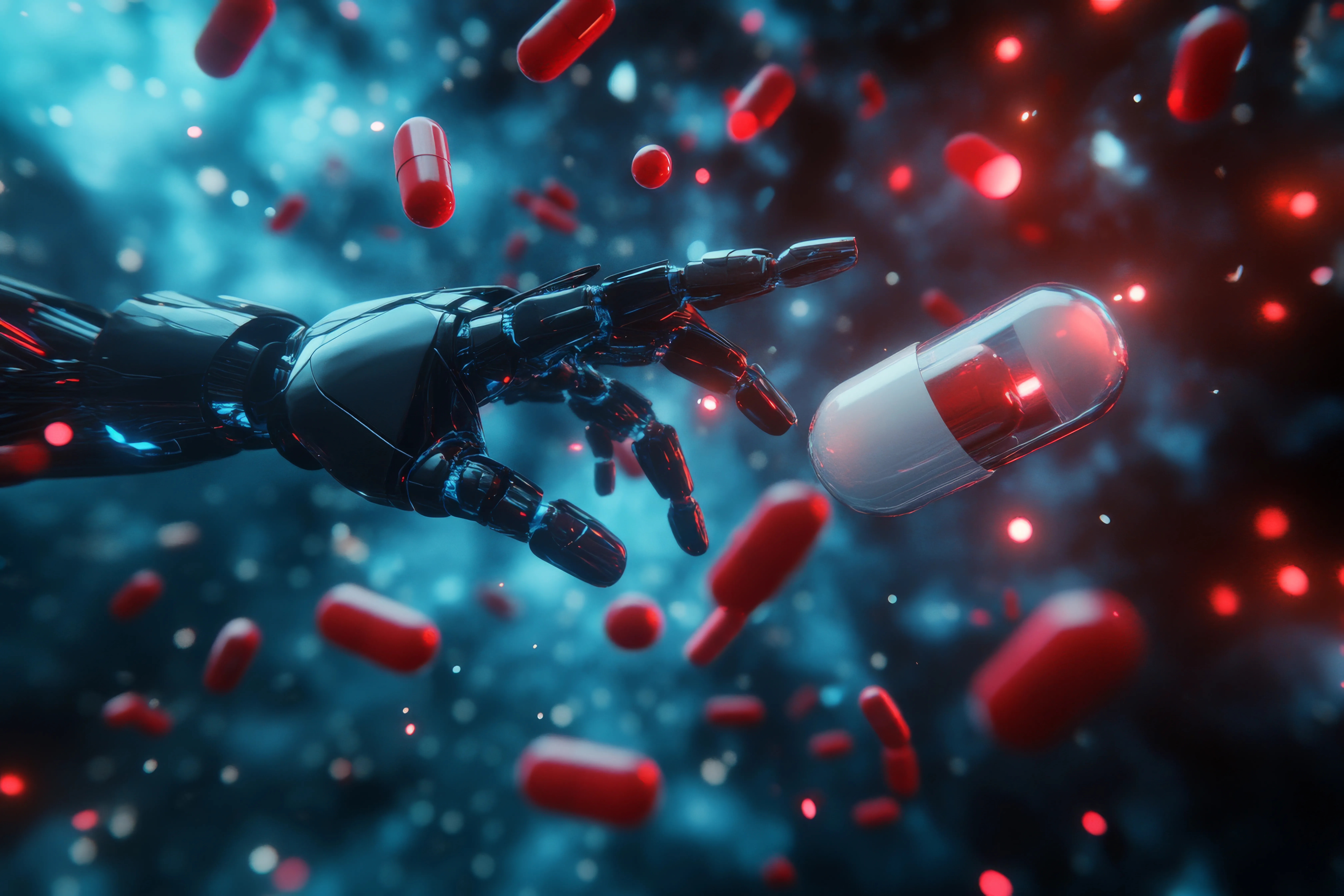
World BI is organizing a conference, next year on Drug Discovery Innovation Programme in Europe. Hit-to-lead programs have historically required numerous rounds of experimentation and substantial laboratory testing. These procedures frequently required years and a significant amount of cash. Researchers may now make quicker and more intelligent judgments thanks to AI-driven drug discovery tools that can evaluate enormous datasets, find intriguing compounds, and make remarkably accurate predictions.
Why Hit-to-Lead Programmes Matter
The hit-to-lead phase bridges the gap between discovering biologically active compounds and selecting lead candidates for preclinical development. The effectiveness and result of the entire medication development process are directly impacted by success at this point.
Important goals consist of:
- Finding substances with potent biological activity
- Increasing target selectivity and potency
- Lowering the risk of toxicity
- Improving ADME characteristics
- Giving preference to applicants who have the best chance of succeeding
Researchers can accomplish these objectives more quickly than with conventional techniques by using machine learning hit-to-lead strategies.
Machine Learning's Impact on Drug Discovery
The modern ML drug discovery pipeline relies on machine learning algorithms to analyze chemical, biological, and clinical datasets. Before laboratory testing starts, these models predict how substances will behave and uncover hidden patterns.
Among the advantages of machine learning are:
Pharmaceutical businesses are able to increase production and speed up research as a result.
Accelerating Hit Identification
Finding promising hits quickly is one of the biggest benefits of AI-driven drug discovery. Researchers may analyze millions of compounds digitally through machine learning-powered virtual screening, greatly lowering the requirement for expensive physical screening.
This method facilitates hit-to-lead acceleration through:
- Reducing the time needed for discovery
- Enhancing the caliber of candidates
- Lowering the cost of screening
- Improving target identification efficiency
To maximize the usefulness of experimental trials, researchers can concentrate laboratory resources on the most promising substances.
Computational Drug Design and Lead Optimization
Lead optimization is changing as a result of developments in computational drug design. Machine learning methods can forecast how structural modifications would impact a compound's pharmacokinetic profile, safety, and efficacy if hits are found.
Researchers benefit from AI-powered optimization:
This data-driven strategy speeds up the conversion of successful compounds into promising lead prospects.
Early Safety Assessment
One of the key reasons why medication research fails is still safety. Early in the discovery process, machine learning models trained on toxicology datasets can detect possible safety issues.
Benefits consist of:
- Predicting toxicity earlier
- A decrease in late-stage failures
- Improved distribution of resources
- Enhanced assurance in the selection of candidates
Pharmaceutical businesses can save time and money by incorporating safety prediction into the machine learning drug discovery process.
The Future of AI Drug Discovery
A major trend in AI drug discovery 2027 is the use of generative AI to design entirely new molecules. Combined with computational drug design, these tools can generate and evaluate novel compounds tailored to specific therapeutic targets.
We've already seen incredible progress, but AI is still just getting started, and the frontiers ahead are even more exciting.
Researchers are using generative AI to design novel drug compounds beyond conventional chemistry, creating new possibilities for treating complex and rare diseases. Multi-omics integration enables deeper insights into disease biology, supporting more precise therapies, while advances in quantum computing may accelerate the simulation of complex molecular interactions. Together, these innovations are making drug discovery faster, smarter, and more patient-centric.
Pharmaceutical companies will be better equipped to find novel therapies, increase development efficiency, and more successfully handle complicated ailments as AI technologies advance.
Conclusion
AI drug discovery 2027 is revolutionizing the pharmaceutical industry by transforming hit-to-lead programmes through advanced machine learning technologies. From virtual screening and lead optimization to safety prediction and computational drug design, AI is driving unprecedented hit-to-lead acceleration. As the ML drug discovery pipeline becomes increasingly sophisticated, organizations adopting AI-driven drug discovery will be better positioned to develop safer, more effective therapies and bring them to market faster.
World BI Drug Discovery Innovation Programme
The Drug Discovery Innovation Programme organized by World BI is a leading global event that brings together pharmaceutical executives, researchers, biotech innovators, and technology experts to explore the latest advancements in drug discovery and early development.
Organized by World BI, the conference focuses on key topics such as AI-driven drug discovery, target identification, precision medicine, biomarker development, computational drug design, and emerging therapeutic modalities. The programme provides a collaborative platform for industry leaders to share insights, address challenges, and accelerate the development of innovative therapies that improve patient outcomes worldwide