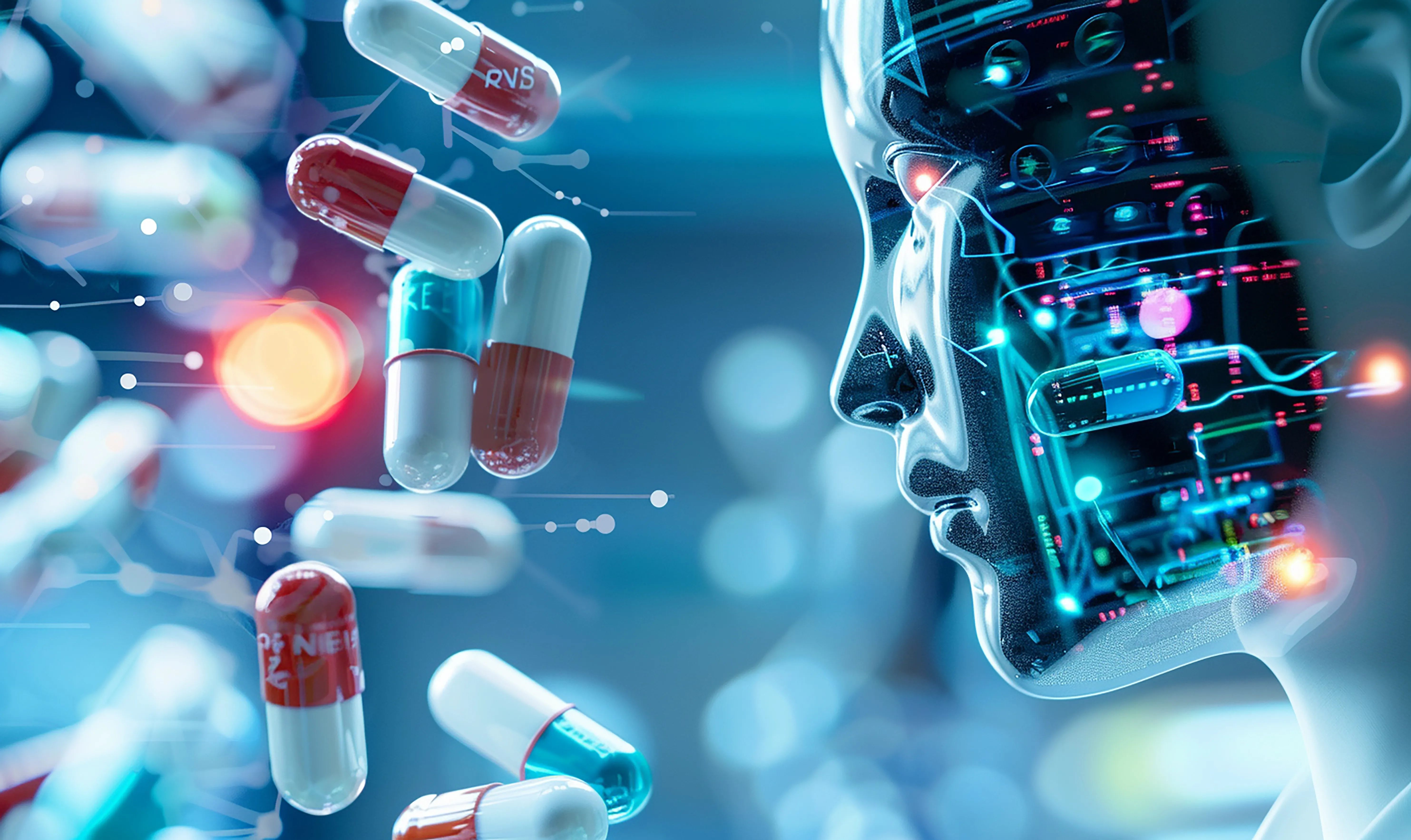
At the same time, human expertise rooted in scientific intuition, clinical experience, and years of research remains the foundation of innovation in life sciences. This convergence has sparked an important debate within the industry: is AI replacing human expertise, or is it enhancing it? As pharmaceutical companies invest heavily in AI technologies, the relationship between machines and scientists is evolving from simple tool usage to strategic collaboration.
The Rise of AI in Drug Discovery
AI has emerged as a powerful tool capable of analyzing vast amounts of biological and chemical data at unprecedented speed.
Key applications of AI in drug discovery include:
- Identification of novel drug targets using large-scale biological datasets
- Virtual screening of millions of compounds in a fraction of the time
- Optimization of molecular structures for improved efficacy and safety
- Prediction of ADMET properties early in development
- Analysis of scientific literature and clinical data
These capabilities allow AI to accelerate processes that traditionally required years of manual research.
Strengths of Human Expertise
Despite technological advancements, human scientists continue to play a critical role in drug discovery.
Human Expertise Contributes Through
- Deep understanding of biological systems and disease mechanisms
- Ability to interpret complex and ambiguous data
- Scientific intuition developed through experience
- Creative problem-solving in uncertain scenarios
- Ethical decision-making and clinical judgment
Human insight remains essential for guiding research strategies and ensuring that discoveries are meaningful and clinically relevant.
Where AI Excels
AI offers distinct advantages in areas that involve large-scale data processing and pattern recognition.
Key Strengths of AI Include:
- Rapid analysis of massive datasets beyond human capability
- Identification of hidden patterns and correlations
- High-throughput virtual experimentation
- Consistency and reduction of human bias
- Ability to continuously learn from new data
These strengths make AI particularly valuable in early-stage discovery and data-intensive tasks.
Limitations of Artificial Intelligence
While AI is powerful, it is not without limitations.
Challenges associated with AI include:
- Dependence on high-quality and well-curated data
- Limited ability to understand biological context fully
- Lack of true reasoning and scientific intuition
- Difficulty in interpreting unexpected or novel results
- Potential for bias if trained on incomplete datasets
AI systems are only as effective as the data and models they are built upon, highlighting the need for human oversight.
AI brings speed, scale, and analytical power — while human expertise provides context, creativity, and critical judgment. Together, they are more powerful than either alone.
The Case for Collaboration
Rather than viewing AI and human expertise as competing forces, the industry is increasingly embracing a collaborative approach.
Benefits of collaboration include:
- Combining computational power with scientific insight
- Enhancing decision-making through complementary strengths
- Reducing time and cost in drug discovery
- Improving accuracy in target identification and validation
- Enabling more efficient Design–Make–Test–Learn cycles
Collaboration allows both AI and human expertise to contribute where they are most effective.
Real-World Applications of AI–Human Collaboration
Pharmaceutical companies are already integrating AI into their research workflows alongside human expertise.
Examples of collaborative applications include:
- AI-assisted drug design guided by medicinal chemists
- Data-driven target discovery validated by biological researchers
- Clinical trial design supported by predictive analytics
- Integration of AI models with laboratory experimentation
- Cross-functional teams combining data scientists and biologists
These examples demonstrate how collaboration is driving innovation across the drug discovery pipeline.
Impact on the Role of Scientists
The rise of AI is transforming the role of scientists rather than replacing them.
Key changes in scientific roles include:
- Increased focus on data interpretation and strategy
- Greater collaboration with computational and data science teams
- Need for interdisciplinary skills combining biology and technology
- Shift from manual experimentation to oversight of automated systems
- Emphasis on critical thinking and innovation
Scientists are evolving into strategic decision-makers who guide AI-driven research.
Ethical & Strategic Considerations
The integration of AI into drug discovery raises important ethical and strategic questions.
Key considerations include:
- Ensuring transparency in AI-driven decisions
- Maintaining accountability for research outcomes
- Addressing potential biases in data and algorithms
- Protecting patient data and privacy
- Defining the role of human oversight in automated systems
Balancing innovation with responsibility is essential for sustainable progress.
The Future: Collaboration Over Competition
The future of drug discovery is unlikely to be defined by competition between AI and humans, but by their integration.
Future trends include:
Development of more advanced AI systems with improved interpretability
Greater integration of AI across all stages of drug discovery
Expansion of interdisciplinary research teams
Increased reliance on data-driven decision-making
Continued importance of human creativity and ethical judgment
Conclusion
This collaborative model represents a new paradigm in pharmaceutical research. The debate between artificial intelligence and human expertise in drug discovery is not about choosing one over the other. Instead, it is about understanding how these two forces can work together to drive innovation. AI brings speed, scale, and analytical power, while human expertise provides context, creativity, and critical judgment.
At World BI, the Drug Discovery Innovation Programme highlights this evolving relationship as a cornerstone of future innovation. By embracing collaboration rather than competition, the pharmaceutical industry can unlock new possibilities and accelerate the development of life-saving therapies for patients worldwide.